
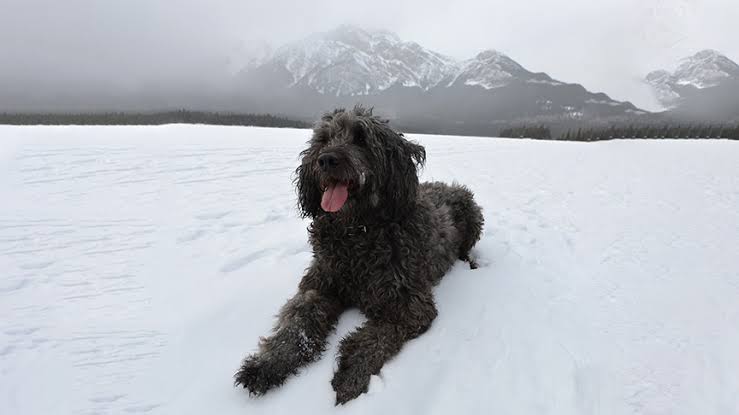
A remarkable variation of a breed well-known for its golden, apricot, or cream-colored coat is the Black Golden Doodle. These dark-coated dogs have an esthetic refinement that distinguishes them amid a sea of lighter-colored doodles, yet they are sometimes disregarded in favor of the breed’s eponymous colors. Beyond their alluring beauty, tho, they are complicated companions that need particular attention, knowledge of their genetic makeup, and reasonable expectations for their upkeep and health. Moving past the novelty of the breed to offer a thorough look at the practicalities of living with a black Goldendoodle, this article acts as a definitive guide for prospective owners and lovers.
Overview of the Black Golden Doodle
The dominant pigmentation genes necessary for a solid black coat are inherited by the Black Golden Doodle, which is essentially a hybrid between a Golden Retriever and a Poodle. Although the “Golden” in their name frequently confuses potential customers, the Poodle’s wide range of available coat colors makes the black variant not only feasible but also gaining popularity. These canines share the same loving, perceptive, and gregarious disposition that has made the Goldendoodle a household name. It is evident that their coat color is only the beginning of their distinctive tale as we delve into the complexities of their genetics, grooming requirements, and long-term health.
Debunking the Myth: Are They Rare?
 The black coat color is a dominant genetic trait inherited from the Poodle parent, making Black Goldendoodles a standard expectation rather than a rare anomaly.
A common misconception in the dog world is that Black Golden Doodle are exceptionally rare or “exotic.” In reality, black is a dominant color in Poodle genetics. If a breeder is working with a black Standard Poodle, the likelihood of producing black offspring is quite high, provided the Poodle does not carry hidden recessive genes for lighter colors. Therefore, these dogs are not rare; they are simply less frequently marketed as “showpieces” compared to the iconic cream or gold varieties. Their “rarity” is often a marketing tactic used by breeders to command higher prices. A knowledgeable buyer should view them as a standard, albeit beautiful, iteration of the breed rather than an anomaly.
The Dark-Coated Dood’s Special Appeal
Unquestionably, a dark-coated Goldendoodle exudes refinement. Their athletic, well-proportioned build is highlighted by the silhouette created by their solid black fur, which frequently seems to absorb light. The fact that they resemble sleek, energetic family dogs rather than “stuffed animals” is what many owners find appealing. Additionally, black coats frequently conceal surface-level dirt more effectively than lighter coats, which can be advantageous for active families who like playing outside or hiking. Managing a coat that responds differently in the sun than its lighter counterparts is a hidden issue associated with this esthetic.
The Science of the Shade: Comprehending the Genetics of Black Goldendoodles
To truly understand the Black Golden Doodle, one must look at the canine genetic map. The expression of color in these dogs is dictated by the interaction between the Poodle’s extensive color palette and the Golden Retriever’s specific inheritance.
The Genetic Decoder: K, E, and B Locus Explained
Color is determined by specific loci. The K locus, specifically the dominant “KB” allele, is responsible for the solid black color. If a dog possesses the KB allele, it will be solid black, effectively masking other color patterns that might otherwise be present. The E locus determines whether the dog can express black pigment in the coat; if a dog is “ee” (recessive red), they will be golden or cream, regardless of the presence of the K gene. Finally, the B locus dictates whether the pigment is black or brown (liver). A Black Golden Doodle must possess the correct combination of these genes to ensure that deep, rich pigmentation is expressed.
Dominant Black vs. Recessive Red: Why Some Litters Are All Black
When a breeder pairs a black Poodle with a Golden Retriever, the outcome can be unpredictable unless the parents’ genetic profiles are known. Because the Golden Retriever is genetically “ee” (carrying the recessive red trait), they effectively “mask” the black color in their offspring. However, if the Poodle parent carries the KB allele, the puppies will likely be black. If the breeder is targeting specific outcomes, they must understand that the black gene is dominant, whereas the golden hue is recessive. This is why a litter can result in entirely black puppies if the parents are homozygous for the dominant black gene.
The Role of the Poodle vs. the Golden Retriever in Color Inheritance
The Poodle provides the “blueprint” for the coat’s color potential, while the Golden Retriever introduces the temperament and coat texture. The Poodle is a genetically diverse breed when it comes to color, which is why we see black, blue, silver, white, and apricot. When this diversity is introduced to the Golden Retriever—which is restricted to shades of gold—the result is often a “Black Goldendoodle” that may or may not retain its deep color into adulthood depending on its specific genetic inheritance.
Coat Variations and Aesthetic Patterns
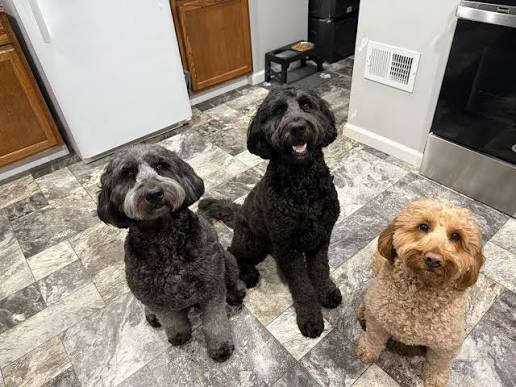
While solid black is common, the genetics of the Poodle ensure that interesting patterns can emerge.
Solid Black vs. Multi-Colored Coats
A solid Black Golden Doodle is prized for its uniformity. However, some dogs may exhibit “bleeding” or phantom markings. Multi-colored coats occur when recessive patterns like the “S” locus (spotting) come into play, potentially creating patches of white or tan on a black base.
The “Tuxedo” and White Diamond-Shaped Markings
The “Tuxedo” pattern is a fan favorite. This occurs when the dog has white patches on the chest and occasionally the feet, set against a solid black background. These markings are not “accidents” but are dictated by the dog’s white spotting genes. These dogs often look as though they are dressed for a formal event, which significantly increases their aesthetic popularity.
Rare Patterns: Phantom, Merle, and Harlequin
Phantom markings—tan points on the eyebrows, muzzle, and legs—are a result of the “At” allele. While beautiful, these markings can sometimes fade as the dog matures. Merle and Harlequin patterns, conversely, are typically associated with different breeds (like Australian Shepherds or Great Danes) and should generally be avoided in Goldendoodle breeding due to significant health risks related to deafness and eye abnormalities.
The Parti Coat and Black-and-White Variations
A “Parti” Goldendoodle is at least 50% white with patches of another color, such as black. These dogs have a whimsical, spotted look that provides a sharp contrast to the standard solid-colored Goldendoodles.
Generations and Predictability
Understanding the generation (F1, F1b, Multigeneration) is the single most important factor in predicting coat texture and shed levels.
F1 Goldendoodles: The First Cross
The F1 generation (50% Poodle, 50% Golden Retriever) is the first cross. These dogs often have the most unpredictable coats. They may be wavy, curly, or even straight-haired, and they are generally the most likely to shed among the Goldendoodle generations.
F1b and Multigenerational: Maximizing Hypoallergenic Qualities
The F1b cross (F1 Goldendoodle x Purebred Poodle) results in a dog that is 75% Poodle. This is the gold standard for those seeking low-shedding, hypoallergenic qualities. Multigenerational doodles, bred from two Goldendoodle parents, allow breeders to “set” traits like color and coat texture more effectively.
Understanding Size Expectations: From Mini to Standard
Coat color has no correlation with size. Whether you are looking for a Mini, Medium, or Standard Goldendoodle, the black gene can be present in all. Size is determined by the Poodle parent (Toy, Miniature, or Standard). Always confirm the size of the Poodle parent, as this is the primary predictor of the puppy’s final weight and height.

Specialized Grooming for the Black Coat
Black fur presents unique challenges. While it doesn’t show “dirt” as easily as white, it shows dander, dust, and debris in high contrast.
Managing “The Reddening Factor”: Preventing Sun-Bleaching and Oxidation
Many owners are shocked when their deep black puppy begins to turn “rust” or brown. This is “sun-bleaching.” Exposure to UV rays breaks down the melanin in the hair, causing it to oxidize. To prevent this, limit prolonged midday sun exposure and consider grooming products specifically formulated to protect dark coats from UV damage.
Products and Techniques for a “Black Diamond” Sheen
To maintain a healthy, glossy coat, focus on hydration. Use high-quality, moisturizing shampoos and conditioners. Avoid harsh, stripping cleansers. Regular brushing is non-negotiable; black coats look lackluster when matted or dusty, so a slicker brush should be part of your daily routine.
Coat Texture and Maintenance: Wavy vs. Curly
Curly coats are prone to matting close to the skin. Because the coat is black, it can be difficult to see if the skin is inflamed or if a tick is present. You must develop the habit of “line brushing,” where you lift the hair section by section to ensure you are reaching the skin.
Managing Dander and Shedding in Dark Fur
If you have light-colored furniture, you will notice shed black hair immediately. Even low-shedding dogs lose hair. Using a high-velocity dryer after a bath can help blow out dead, loose hair, preventing it from ending up on your rugs and upholstery.
The “Health-First” Integration: Beyond Aesthetics
Regardless of color, health should be the priority. A black coat is just a pigment; it does not protect the dog from genetic diseases.
The Importance of Genetic Panels and Testing
Responsible breeders use extensive genetic panels (e.g., Embark or Wisdom Panel) to screen for breed-specific issues like Von Willebrand disease, Degenerative Myelopathy, and Neonatal Encephalopathy with Seizures. Never purchase a puppy from a breeder who cannot provide documented health clearances.
Structural Health: Hips, Elbows, and Patellas
Large-breed Goldendoodles are susceptible to hip and elbow dysplasia. Smaller varieties often face patellar luxation. Ensure that both parent dogs have been certified by the Orthopedic Foundation for Animals (OFA).
Vital Checks: Eye Problems and Heart Health
Golden Retrievers are prone to specific eye conditions and heart issues (subaortic stenosis). Ensure these systems have been cleared by veterinary ophthalmologists and cardiologists. Color does not exempt a dog from these risks.
Linking Color Genetics to Health: The Merle and S Locus Considerations
Avoid “Merle” Goldendoodles. This pattern is often achieved by crossing breeds, which introduces unpredictable health risks, including severe sensory impairments. Stick to breeders who prioritize health over trendy, complex patterns.
Temperament and Training
A dog’s color does not determine its personality. Temperament is a product of early socialization, genetics, and environment.
The “Teddybear” Personality: Intelligence and Playfulness
Goldendoodles are inherently intelligent, eager to please, and highly social. They require mental stimulation and daily exercise. Their “Teddybear” persona is a result of their high-energy, affectionate nature, not the shade of their fur.
Socialization Cues: Why Visibility Matters for Dark-Coated Dogs
In low-light conditions, black dogs can be difficult for others to see. This is a safety consideration, not a temperament issue. Use reflective gear, such as collars, harnesses, or LED lights, during evening walks to ensure your dog is visible to drivers and other pedestrians.
Conclusion
The Black Goldendoodle is an amazing, perceptive, and incredibly loving friend. Ownership is mostly focused on training, grooming, and health, even though their dark, glossy coat gives them a distinctive appearance that sets them out from the crowd. You can make sure your dog is a healthy and content member of your family for many years to come by emphasizing early socialization, keeping a regular grooming regimen to maintain the texture and color integrity of the coat, and concentrating on genetic health. The basic needs of safe dog ownership should not be overshadowed by the attraction of their color. The color of a healthy, well-bred dog’s coat is just the finishing touch on an otherwise remarkable animal. Always prioritize breeder transparency and health testing over aesthetic trends, and you will be rewarded with a loyal, vibrant companion who stands out both in appearance and in spirit.