

The Golden doodle puppies has ascended to the pinnacle of canine companionship, blending the gentle, people-pleasing nature of the Golden Retriever with the sharp, hypoallergenic intellect of the Standard Poodle. As prospective owners look beyond the charming aesthetics of these curly-coated companions, they often find a complex, intelligent, and highly social animal that requires more than just affection to thrive. This guide moves past the typical breeder-marketing narratives to provide an objective, expert-level analysis of what it truly means to integrate a Goldendoodle into your life. Whether you are navigating the complexities of genetic generations, managing the reality of high-maintenance grooming, or preparing for the emotional rigors of puppyhood, this article serves as your blueprint for success.
Understanding the Goldendoodle: A Perfect Blend of Two Worlds
The History and Origin of the Golden Retriever and Poodle Mix
The Golden doodle puppies emerged in the late 1990s, gaining popularity as a intentional crossbreed—or “designer dog”—designed to harness the benefits of hybrid vigor. By crossing the Golden Retriever, a breed renowned for its soft temperament and high sociability, with the Poodle, an incredibly intelligent and low-shedding breed, breeders aimed to create an ideal family companion. Unlike purebred dogs, which have set standards governed by kennel clubs, the Goldendoodle remains a hybrid. This means that while they benefit from a diverse gene pool, physical and behavioral characteristics can vary significantly, even within the same litter.
Why Goldendoodles Are Top Choice Family Companions
The sustained popularity of the Golden doodle puppies is not accidental. Their temperament is the primary driver: they are generally eager to please, highly trainable, and possess a non-aggressive nature that makes them excellent candidates for households with children. Their intelligence allows for rapid mastery of obedience commands, provided the owner employs consistent, positive reinforcement. Because they are “people-oriented,” they integrate seamlessly into active family units, though this same trait necessitates careful management of their social needs to prevent boredom.
Sizing Up Your Options: Standard, Medium, and Mini Goldendoodles
 A quick reference guide comparing the weight ranges and ideal living environments for Standard, Medium, and Mini Goldendoodles.
Standard Goldendoodles: The Large-Scale Best Friend
The Standard Goldendoodle is typically the result of crossing a Golden Retriever with a Standard Poodle. Often weighing between 50 and 90 pounds, these dogs require ample space and a robust exercise regimen. Their size makes them ideal for hiking companions or active partners, but they can be overwhelming in cramped urban apartments.
Medium Goldendoodles: The Middle-Ground Companion
The Medium Goldendoodle is often achieved by crossing a smaller Standard Poodle or a Moyen Poodle with a Goldendoodle or Retriever. Ranging from 30 to 50 pounds, they offer a balanced compromise, providing enough mass to be sturdy playmates while remaining manageable in a suburban living environment.
Mini Goldendoodle Puppies: Compact Intelligence for Smaller Spaces
Miniature Goldendoodles are created by incorporating Toy or Miniature Poodle genetics into the lineage. Weighing anywhere from 15 to 30 pounds, these dogs are highly sought after for apartment living. However, owners should note that “miniature” refers to size, not necessarily energy level. These dogs are often just as active as their larger counterparts and require dedicated daily mental and physical stimulation.
Decoding Generations: F1 vs. F1b Goldendoodles
The F1 Cross: The Classic 50/50 Genetics
An F1 Goldendoodle is the direct result of a purebred Golden Retriever mated with a purebred Poodle. This generation typically displays the most variability, as they inherit a mix of traits from both parents. They may shed more than subsequent generations and have a wider variety of coat textures.
The F1b Goldendoodle: Maximizing Hypoallergenic Qualities
The F1b generation—produced by breeding an F1 Goldendoodle back to a purebred Poodle—is often preferred by those with mild dog allergies. Because the offspring are 75% Poodle, they are much more likely to possess the low-shedding, curly coat associated with the Poodle parent, making them a more predictable choice for owners sensitive to dander.
Multigenerational Breeding and Predictability
Multigenerational (F2, F3, or “multi-gen”) Goldendoodles involve breeding two Goldendoodles together. Experienced breeders use this method to stabilize specific traits, such as coat type, size, and temperament. While these dogs are more predictable in their physical appearance, they rely heavily on the breeder’s commitment to ethical selection and health testing.
Personality and Temperament: What to Expect
High Intelligence and Eagerness to Please
Goldendoodles are exceptionally bright, often learning new commands within a few repetitions. However, this intelligence can be a liability if left unguided. If a Goldendoodle is not challenged with puzzles, training, or vigorous play, they are prone to “self-employment,” which often manifests as destructive chewing or nuisance barking.
Socialization and Friendly Disposition with Children
Their innate sociability makes them generally friendly with strangers and other pets. Early socialization is key; exposing a puppy to a variety of environments, sounds, and people before 16 weeks of age is critical. This helps prevent the development of fear-based anxieties in their later life.
Potential for Therapy & Emotional Support Programs
Because they are highly empathetic and stable, many Goldendoodles are natural therapy dogs. They seem to intuitively sense human emotional states, making them excellent candidates for comfort roles in hospitals or schools, provided they have passed basic temperament evaluations.
Managing Separation Anxiety and Social Stress
Perhaps the greatest challenge of owning a Goldendoodle is their profound attachment to their human pack. They are prone to separation anxiety. Owners must implement crate training and incremental “time-alone” practice early on to ensure the dog remains calm when the family is away.
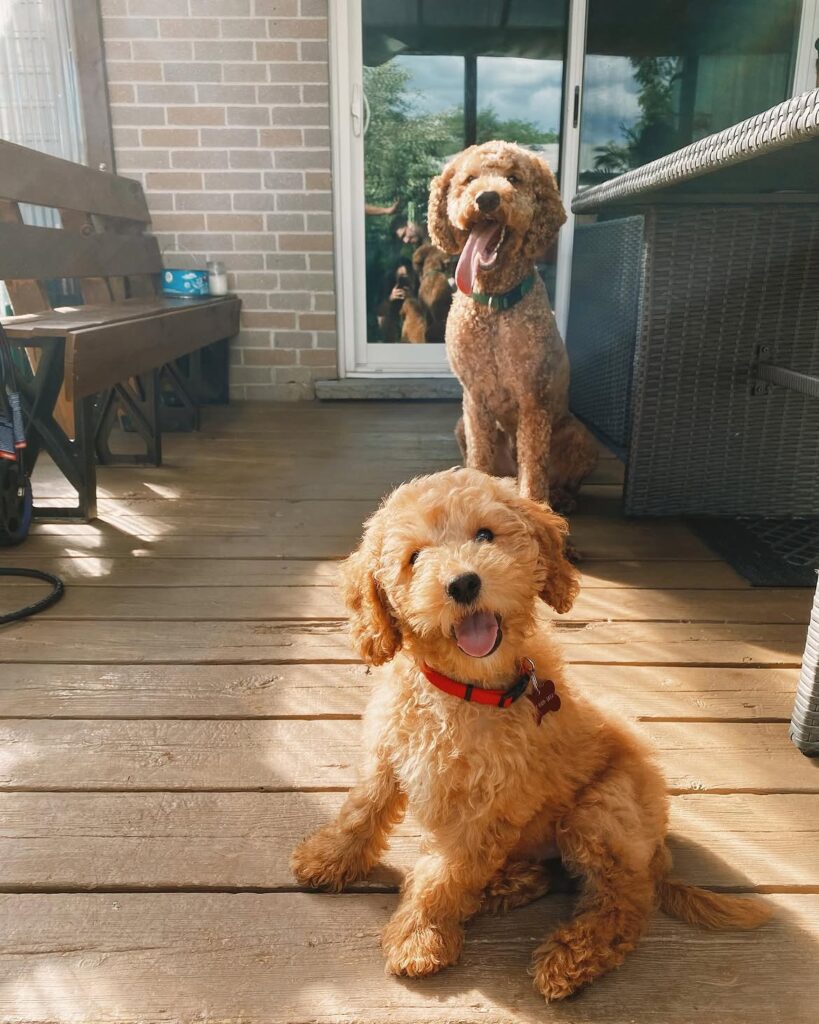
The Truth About Hypoallergenic Coats and Grooming
Understanding Coat Types: Wavy, Curly, and Flat
Coat types generally fall into three categories: wavy (loose curls), curly (tight, poodle-like coils), and flat (straight/wavy, similar to a retriever). While curly coats shed the least, they require the most significant maintenance to prevent painful matting.
Managing the “Hypoallergenic” Myth: Allergies and Dander
No dog is 100% hypoallergenic. Allergies are caused by proteins in dander, saliva, and urine. While Golden doodle puppies shed less than a Golden Retriever, they still produce dander. Potential owners with severe allergies should spend time with a Goldendoodle before committing to ownership, rather than relying on the “hypoallergenic” marketing label.
Professional Grooming Needs and Home Maintenance
Goldendoodles require professional grooming every six to eight weeks. Between visits, owners must brush their dog at least three times a week to prevent the undercoat from tangling. Neglecting this leads to painful mats that may require the groomer to shave the dog down to the skin—a traumatic experience for the animal.
Mini Goldendoodle Grooming Specifics
Smaller varieties often have denser, faster-growing coats that can trap debris more easily. Consistent facial grooming is necessary to prevent “tear stains” and matting around the eyes and snout, which can lead to skin infections if neglected.
Essential Health and Genetic Wellness
The Importance of Health-Tested Parents
Hybrid vigor is a debated concept, but it does not replace the necessity of genetic testing. Responsible breeders screen parents for hip dysplasia, elbow dysplasia, and common ocular diseases. Never purchase a puppy from a breeder who cannot provide documented OFA (Orthopedic Foundation for Animals) or equivalent test results.
Common Hereditary Concerns: Hip Dysplasia and Elbow Dysplasia
Due to their Golden Retriever ancestry, Golden doodle puppies are predisposed to joint issues. Maintaining a healthy weight and avoiding excessive jumping on hard surfaces during the first 12 months of life is crucial for skeletal development.
Genetic Screenings: Von Willebrand’s Disease and Progressive Retinal Atrophy
Modern genetic testing can identify markers for bleeding disorders and inherited blindness. Ensuring that the Poodle and Retriever parents are clear of these markers is a non-negotiable step in responsible breeding.
Critical Health Risks: Gastric Dilation Volvulus (Bloat) and Heart Disease
Larger Goldendoodles are at risk for bloat, a life-threatening condition where the stomach twists. Preventing vigorous exercise immediately after meals and using slow-feeder bowls are standard preventative measures.
The Value of Pet Insurance for Hybrid Breeds
Because they are prone to unique health issues, pet insurance is a wise investment. It protects owners against the high cost of emergency surgeries or long-term management of chronic conditions, ensuring that veterinary decisions are based on the dog’s health rather than financial strain.
Training Tips for a Well-Adjusted Puppy
The Power of Positive Reinforcement
Goldendoodles respond best to reward-based training. Clicker training and high-value treats are highly effective tools. Avoid harsh reprimands; these sensitive dogs may shut down or develop fear responses if treated with aggression or overly forceful correction. Consistency is the foundation of their obedience.
Conclusion
Bringing a Goldendoodle into your home is a long-term commitment that balances immense reward with significant responsibility. These dogs offer unparalleled loyalty, intelligence, and a capacity for affection that makes them exceptional family members. However, their physical beauty is not a substitute for the hard work required to manage their grooming needs, social requirements, and training.
By prioritizing health-tested lineage, investing time in consistent positive reinforcement training, and accepting the reality of the daily “hidden work” of grooming and mental stimulation, you set the stage for a thriving partnership. As you embark on this journey, remember that the most successful owners are those who view their Goldendoodle not as a perfect, low-maintenance accessory, but as a living, breathing sentient partner that requires your patience, your time, and your active engagement every single day. If you are prepared to meet these requirements, you will find that a well-socialized and properly trained Goldendoodle is one of the most rewarding companions a family can welcome into their fold. Ensure you establish a relationship with a veterinarian early, secure comprehensive insurance, and commit to the process of raising your puppy with patience and scientific, evidence-based care.