

The Chocolate Goldendoodle is a distinctive variation of the popular Goldendoodle, admired for its rich brown coat and affectionate personality. Goldendoodles are known for combining characteristics from the Golden Retriever and Poodle, including intelligence, sociability, and a strong desire to interact with their families. The chocolate color adds a unique appearance that makes these dogs especially appealing to many prospective owners.
However, choosing a Chocolate Goldendoodle should involve more than simply falling in love with its coat color. Genetics can influence pigmentation, coat texture, adult appearance, and other characteristics. Understanding these factors can help future owners develop realistic expectations and make informed decisions when selecting a puppy.
What Is a Chocolate Goldendoodle?
A Chocolate Goldendoodle is a Goldendoodle with brown or liver-colored pigmentation. Goldendoodles are produced by crossing a Golden Retriever with a Poodle, and the characteristics of each puppy can vary depending on the genetics inherited from both sides of the family.
The chocolate coloration is associated with recessive genetic variants that affect the production of dark pigment. When the appropriate combination of genes is inherited, black pigment can be replaced by brown pigmentation.
This can result in features such as:
- Rich brown or chocolate-colored fur
- Brown or liver-colored nose
- Brown pigmentation around the eyes
- Brown paw pads
While the color comes from genetics, other characteristics—including temperament, coat texture, body size, and health—are influenced by a much broader combination of inherited traits.
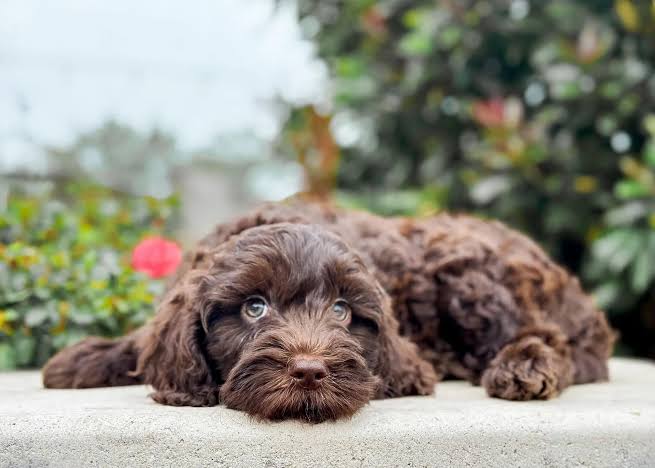
Why Is the Chocolate Goldendoodle So Appealing?
One of the first things people notice about a Chocolate Goldendoodle is its distinctive brown coat. The color can range from a deep, dark chocolate to softer or lighter brown shades.
Some dogs may also have lighter-colored eyes that complement the darker coat, although eye color can vary between individual dogs.
The combination of a brown coat, wavy or curly hair, and the characteristic facial furnishings found in many Goldendoodles can create the teddy-bear appearance that attracts many families.
Nevertheless, appearance should only be one consideration when choosing a puppy. A responsible decision should also take into account the dog’s health background, temperament, expected size, grooming needs, and the quality of the breeder’s program.
Chocolate Coat Color and Goldendoodle Genetics
The genetics behind a Chocolate Goldendoodle’s color can be more complicated than simply identifying a brown-coated puppy.
Brown pigmentation is associated with the B locus, where the recessive brown allele can affect the production of black pigment. A dog generally needs two copies of the relevant recessive allele to express brown pigmentation.
Because Goldendoodles inherit genetic material from both Golden Retrievers and Poodles, the final coat color depends on the specific combination of genes inherited from the parents.
This is why breeders who understand canine genetics can use information about the parents and, when appropriate, genetic testing to better predict possible coat colors in a litter.
The Role of the Poodle in Chocolate Coloring
Brown is an established coat color in Poodles, making the Poodle side of a Goldendoodle’s pedigree particularly important when investigating chocolate coloration.
However, it is overly simplistic to assume that every Chocolate Goldendoodle inherits all of its color characteristics exclusively from the Poodle parent. Coat color is determined by interactions among multiple genes, and both parents contribute genetic material to their puppies.
For prospective owners, the important point is that a puppy’s color is a genetic characteristic and should not be considered an indicator of its overall health or personality.
Chocolate Goldendoodle vs. Other Goldendoodle Colors
Goldendoodles can appear in a wide range of colors, including:
- Cream
- Apricot
- Golden
- Red
- Brown or chocolate
- Black
- Various patterns and markings
Chocolate Goldendoodles stand out because of their brown pigmentation, but color does not determine temperament, intelligence, trainability, or quality of life.
When selecting a puppy, health and temperament should take priority over obtaining a particular coat color.
The Science of the Shade: Genetics and Inheritance
 The recessive ‘b/b’ genotype not only produces the rich brown coat but also dictates the unique liver-colored pigmentation of the nose, eye rims, and paw pads.
Understanding the Recessive “b” Locus
The chocolate coat color is dictated by the b locus. In canine genetics, the standard black coat color is dominant, but the presence of the recessive b gene at this locus, when inherited in a double dose (b/b), prevents the production of black pigment. Instead, the dog produces brown pigment. This is why a “true” chocolate dog will always have a liver-colored nose, eye rims, and paw pads rather than the traditional black pigmentation.
The Role of the Poodle Heritage in Color
Poodles carry the genetic blueprint for a variety of coat colors, including brown, silver, and phantom. To produce a chocolate Goldendoodle, the Poodle parent must carry the b/b genotype. Because the Golden Retriever is genetically incapable of producing solid chocolate pigment, every chocolate puppy born must have inherited the necessary recessive alleles from the Poodle parent. This makes the color dependent on the specific lineage of the Poodle ancestor.
Genetic Complexity: Why Two Chocolate Parents Don’t Always Guarantee Chocolate Puppies
Breeding for color is notoriously difficult because many genes influence coat shade and intensity. Even if both parents appear chocolate, they may carry other modifying genes that impact the outcome. Furthermore, the presence of the “fading” gene or patterns like “phantom” (tan points) can drastically alter the final look of a puppy. Reputable breeders understand that color is a secondary trait, secondary to the health testing and temperament testing that must be performed to maintain the integrity of the line.
The “Chocolate Fade” Reality: Managing Expectations
The Transition from Puppy Coat to Adult Color
One of the most frequently misunderstood aspects of the Chocolate Goldendoodle is the “fading” phenomenon. Many puppies are born with deep, dark chocolate coats, but as they age, their fur may lighten significantly due to the progressive graying gene, which is common in Poodles. This is not a failure of the breeding program, but a biological reality of the breed’s coat genetics. Owners should be prepared for their puppy’s coat to shift toward a lighter, café-au-lait, or even taupe shade as they reach adulthood.
Understanding Silver Beige, Cafe au Lait, and Smoky Taupe
The transition of coat color is a fascinating, albeit unpredictable, process. A dog that appears dark brown as an eight-week-old puppy may settle into a beautiful, muted silver-beige or cafe-au-lait color by age three. Recognizing that the “chocolate” puppy you purchase today may look different in three years is an essential part of responsible ownership. Understanding this progression helps prevent disappointment and fosters a deeper appreciation for the unique aging process of your dog.
Environmental Factors: Can Sunlight Bleach a Chocolate Coat?
While the primary driver of color change is genetic, environmental factors can play a minor role. Exposure to intense, direct sunlight for extended periods can cause “sun-bleaching” on the tips of the hair, leading to a temporary reddish or lighter brown tint. While this is not the same as the genetic fading of the base coat, it is important for owners to realize that a dog’s coat is dynamic and subject to external influences.

Physical Characteristics of the Chocolate Goldendoodle
Pigmentation: Brown Noses vs. Black Noses
As previously established, a true chocolate dog will demonstrate liver or brown pigmentation. A dog with a black nose and black eye rims is not genetically “chocolate,” regardless of how dark its fur may appear. Professional breeders identify these pigment markers early, as they serve as a clear indicator of the recessive b/b genotype.
Coat Types: Curly, Wavy, and Flat Coats
The Goldendoodle coat can vary from tight, Poodle-like curls to a loose, wavy retriever-style coat, or occasionally a flatter, straighter coat. The texture of a chocolate coat is often dense and rich. The curl pattern is dictated by the KRT71 gene. Owners should be aware that the tighter the curl, the more regular the grooming schedule must be to prevent matting, especially in the thick, dense fur of the chocolate variety.
Identifying Furnishings (The RSPO2 Gene)
“Furnishings” refers to the long, fluffy facial hair—mustaches and eyebrows—that gives Doodles their signature look. This is governed by the RSPO2 gene. A puppy with furnishings will be less prone to shedding and will have the classic “Teddy Bear” aesthetic. Breeders test for this to ensure the desired physical appearance and low-shedding traits are maintained in each generation.
Size Variations: From Mini to Standard
The Popularity of the Brown Mini Goldendoodle
Mini Goldendoodles are highly desired for smaller living spaces. A chocolate Mini is created by crossing a Standard or Miniature Poodle with a Golden Retriever (F1) and then potentially breeding back to a Miniature Poodle (F1B). These dogs are compact, highly portable, and carry the same charm as their larger counterparts, making them ideal for urban dwellers.
Medium and Standard Chocolate Goldendoodles
Standard Goldendoodles retain the athletic build of the Golden Retriever. They require more physical space and exercise but are excellent companions for active families. Whether mini or standard, the size of a Chocolate Goldendoodle is largely determined by the size of the Poodle ancestor used in the pairing.
Predicting Adult Size Based on Generation (F1 vs. F1B)
Generational breeding allows for greater control over physical traits. F1 generations are 50% Golden Retriever and 50% Poodle. F1B generations—which involve a Goldendoodle bred back to a Poodle—are 75% Poodle, which generally increases the likelihood of a curly, low-shedding coat and a smaller, more predictable adult size.
Temperament and Personality: The “Velcro-Dog” Experience
Social Nature and “Puppy Kisses”
Chocolate Goldendoodles are notoriously affectionate. They are often referred to as “Velcro-dogs” because of their desire to be in close physical proximity to their owners. This social nature makes them excellent family dogs but also necessitates a commitment to consistent training. They are eager to please, which makes them highly responsive to positive reinforcement.
Managing Separation Anxiety in Goldendoodles
Because they are so bonded to their families, Goldendoodles can be prone to separation anxiety. This is a behavioral, not a genetic, trait. Mitigation begins at home: crate training, consistent routines, and providing mental enrichment, such as puzzle toys, are vital. Teaching a dog to be independent from a young age is one of the greatest gifts an owner can provide.
Energy Levels and the Need for a Fenced Yard
Despite their “cuddly” reputation, these are working-breed crosses. They possess significant energy reserves. A fenced yard is ideal, but daily structured exercise—walks, fetch, or agility training—is mandatory. A bored Goldendoodle is often a destructive one, so matching their energy with meaningful activity is essential for a balanced lifestyle.
Training and Socialization Strategy
Intelligence and Obedience Commands
The Poodle heritage brings extreme intelligence to the mix. These dogs learn quickly, often mastering basic commands like “sit,” “stay,” and “recall” in a fraction of the time required by other breeds. However, intelligence can also lead to stubbornness if training is not consistent. They thrive on having a “job” to do, making advanced obedience or scent work excellent outlets for their cognitive needs.
Positive Reinforcement and Obedience Classes
Training should always be centered on positive reinforcement. Rewards-based systems that utilize treats, praise, and play yield the best results. Enrolling in professional obedience classes provides the added benefit of social exposure to other dogs and people, which is critical for raising a well-adjusted, confident dog.
Early Socialization for a Well-Adjusted Adult
Socialization is not just about meeting other dogs; it involves exposing the puppy to various surfaces, sounds, environments, and people. A well-socialized Chocolate Goldendoodle is confident in new situations and remains calm under pressure. This early investment pays dividends throughout the dog’s life.
Health and Longevity: A Proactive Approach
The Importance of Genetic Testing (DNA Testing)
Health is the foundation of any reputable breeding program. A responsible breeder will conduct comprehensive genetic testing for conditions common to both parent breeds, including hip dysplasia, elbow dysplasia, Progressive Retinal Atrophy (PRA), and von Willebrand’s disease. DNA testing allows breeders to identify carriers of recessive health markers and avoid pairings that could produce affected puppies. Prospective owners should always request these health clearances, as they are the primary defense against long-term medical issues.
Conclusion
Owning a Chocolate Goldendoodle is a deeply rewarding experience, characterized by the companionship of an intelligent, affectionate, and visually stunning dog. However, the allure of the rare chocolate coat must never overshadow the necessity of understanding the breed’s genetic complexities, the potential for coat fading, and the requirement for proactive health management.
By choosing to work with a reputable breeder who prioritizes genetic health testing over purely cosmetic traits, you ensure the best start for your new companion. Remember that the “fading” reality and the need for consistent, positive training are part of the journey. A Goldendoodle is not an accessory, but a lifelong commitment requiring physical and mental stimulation, regular professional grooming, and a focus on long-term wellness. With the right foundation of knowledge and dedication to their specific needs, a Chocolate Goldendoodle will prove to be an invaluable and devoted member of your family for years to come. Invest time in their training, prioritize their health, and you will be rewarded with the unparalleled loyalty that defines this unique breed mix.