
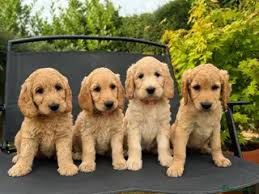
Searching for Goldendoodles for sale near me is often the first step families take when they decide they are ready to welcome a Goldendoodle into their home. Finding a puppy close to where you live can certainly make the process more convenient, but location should not be the most important factor in choosing a breeder.
A Goldendoodle may become part of your family for many years, so the quality of its early care, health background, socialization, and breeding program deserves careful consideration.
Instead of choosing the closest available puppy, look for a breeder who is transparent about the parents, provides appropriate health information, raises puppies in a clean environment, and takes time to understand the families receiving their dogs.
This guide explains what to look for when researching Goldendoodle breeders, how to compare puppies, and what questions to ask before making a commitment.
Should You Choose the Closest Goldendoodle Breeder?
Convenience is useful, but it should not determine your decision.
A breeder located nearby may make it easier to visit the puppies, collect your dog, and return for follow-up support. However, a breeder farther away may have a stronger health-testing program, better socialization practices, or a breeding philosophy that better matches your expectations.
When comparing breeders, consider:
- Health testing of the parent dogs
- Veterinary care provided to puppies
- Living conditions
- Puppy socialization
- Breeder transparency
- Parent temperament
- Expected adult size
- Contract and health policies
- Communication and support after adoption
If the best breeder for your family is several hours away, the additional travel may be worthwhile.
How to Recognize a Responsible Goldendoodle Breeder
A responsible breeder should be comfortable answering detailed questions about their dogs and breeding program.
They should be able to explain where the puppies are raised, what veterinary care they receive, what health testing has been performed on the parents, and how puppies are introduced to normal household experiences.
Questions to Ask a Breeder
Before placing a deposit, consider asking:
- Who are the puppy’s parents?
- What health testing has been completed on the parents?
- Can I review the available health records?
- What are the parents’ sizes and temperaments?
- How are the puppies socialized?
- What veterinary care has each puppy received?
- What food are the puppies currently eating?
- What adult size is expected?
- What type of coat is expected?
- What happens if the puppy develops a health problem after going home?
A trustworthy breeder should not make you feel uncomfortable for asking reasonable questions.
Avoiding “Puppy Mill” Red Flags in Your Local Search
 A quick-reference guide to help you distinguish between a responsible breeder and a potential puppy mill.
Goldendoodle Breeder Red Flags
When searching online for Goldendoodles, it is important to distinguish between a responsible breeder and a seller who may be focused primarily on making quick sales.
Potential warning signs include:
- Multiple unrelated litters constantly advertised as available
- Little or no information about the parents
- No documentation of relevant health testing
- Refusal to answer basic questions
- Pressure to send money immediately
- Unwillingness to discuss the puppy’s living environment
- Poor or overcrowded conditions
- Puppies that appear unwell or poorly socialized
- Claims that every puppy is guaranteed to be hypoallergenic
- Claims that a particular puppy is guaranteed to have a specific adult temperament
One warning sign alone does not necessarily prove that a breeder is irresponsible, but several concerns together deserve careful consideration.
Why Parent Health Testing Matters
A puppy’s health is influenced by genetics as well as nutrition, environment, veterinary care, and many other factors.
Because Goldendoodles combine Golden Retriever and Poodle ancestry, responsible breeding programs should pay attention to health concerns relevant to both parent breeds.
Depending on the breeding program and the individual dogs, health evaluations may include areas such as:
- Hips
- Elbows
- Eyes
- Heart
- Relevant inherited genetic conditions
Organizations such as the Orthopedic Foundation for Animals (OFA) maintain databases and health-screening information for dogs and can be useful when researching documented health clearances.
DNA testing can also identify certain inherited genetic variants. However, a DNA test should not be confused with a complete veterinary health evaluation.
What Does a Healthy Puppy Record Look Like?
Before bringing a Goldendoodle puppy home, ask for documentation of the care it has received.
Records may include information about:
- Veterinary examinations
- Vaccinations
- Deworming
- Microchipping where applicable
- Preventive care
- Feeding routine
- Any known medical concerns
Your own veterinarian should examine the puppy after it arrives in your home according to the appropriate schedule.
No breeder can honestly guarantee that a puppy will never experience a health problem. Responsible breeding can reduce certain risks, but it cannot eliminate every possibility.
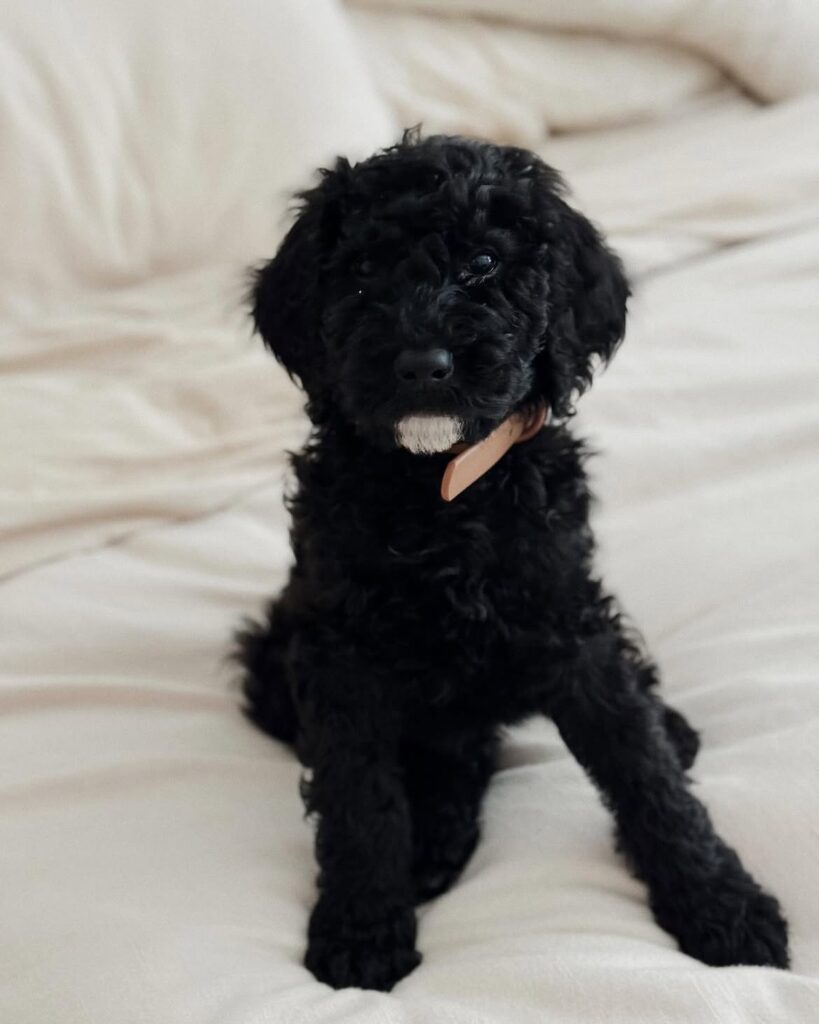
Goldendoodle Temperament and Personality
Goldendoodles are crosses between Golden Retrievers and Poodles, two breeds known for intelligence and strong relationships with people.
Individual Goldendoodles can be affectionate, playful, energetic, curious, and eager to learn.
However, temperament is not guaranteed simply because a puppy is a Goldendoodle.
Personality can be influenced by:
- Genetics
- Parent temperament
- Early experiences
- Socialization
- Training
- Environment
- Individual personality
This is why it is useful to ask a breeder how puppies are raised and whether they observe differences in confidence, activity level, and social behavior among puppies.
Are Goldendoodles Good Family Dogs?
Many Goldendoodles can make wonderful family companions when their needs are properly met.
They often enjoy participating in family activities and can form strong bonds with their owners.
Families should nevertheless understand that a friendly dog still requires supervision and training around children.
Children should learn not to:
- Pull a dog’s ears or tail
- Disturb the dog while eating
- Climb on the dog
- Take away its toys forcefully
- Interrupt the dog while sleeping
Young children should always be supervised when interacting with a puppy.
Choosing Between a Mini and Standard Goldendoodle
Goldendoodles come in different size ranges, depending largely on the Poodle ancestry involved in the breeding program.
Mini Goldendoodle
Mini Goldendoodles are generally smaller and may be easier to accommodate in apartments and smaller homes.
However, their smaller size does not automatically mean they require little exercise.
Medium Goldendoodle
Medium Goldendoodles can provide a middle ground for families wanting a dog that is neither particularly small nor particularly large.
Standard Goldendoodle
Standard Goldendoodles can become substantially larger and may be better suited to families with enough space for a bigger dog.
They can also make excellent companions for people who enjoy outdoor activities.
How Can You Predict a Goldendoodle’s Adult Size?
No breeder can guarantee an exact adult weight or height.
The best estimates are based on factors such as:
- Parent size
- Previous generations
- Poodle size
- Family genetics
- Growth patterns
Ask the breeder about the sizes of both parents and, where available, previous puppies from the same lines.
If having a particular adult size is essential to your household, understand that a Goldendoodle’s final measurements can still vary.
Understanding Goldendoodle Generations
You may see terms such as F1, F1B, and multigenerational Goldendoodle when searching for puppies.
F1 Goldendoodle
An F1 is generally a first-generation cross between a Golden Retriever and a Poodle.
F1B Goldendoodle
An F1B is commonly produced by breeding an F1 Goldendoodle back to a Poodle.
This can influence coat characteristics, but it does not guarantee a particular coat or shedding level.
Multigenerational Goldendoodle
A multigenerational Goldendoodle comes from a breeding program involving Goldendoodle ancestry across multiple generations.
Generation information can be useful, but it should not be used as a guarantee of personality, coat, size, or allergy response.
Goldendoodle Coat Types
Goldendoodle coats can vary significantly.
You may encounter:
- Straight coats
- Wavy coats
- Curly coats
Wavy and curly coats are often associated with lower visible shedding, while straighter coats may shed more noticeably.
Coat type also affects grooming.
A curly Goldendoodle may require particularly consistent brushing to prevent mats, while a wavy coat may have different maintenance requirements.
Are Goldendoodles Hypoallergenic?
No dog is completely hypoallergenic.
Some Goldendoodles may shed less than other dogs, but allergies are associated with proteins found in substances such as dander and saliva, not simply with loose hair.
If allergies are a concern, spend time with the specific dog you are considering before making a commitment.
It is also worth discussing significant allergies with an appropriate healthcare professional rather than relying on a breeder’s guarantee that a particular puppy will not cause symptoms.
Early Socialization of Goldendoodle Puppies
The first weeks of a puppy’s life are an important period for development.
Responsible breeders can expose puppies gradually to appropriate household experiences, handling, sounds, surfaces, people, and other age-appropriate stimuli.
The goal is to create positive experiences without overwhelming the puppies.
Early Neurological Stimulation
Some breeders incorporate carefully controlled early handling exercises into their puppy programs. These practices are intended to provide puppies with varied early experiences.
However, they should not be presented as a guarantee that a puppy will become more intelligent, healthier, or better behaved.
Good early development involves many factors, including genetics, appropriate care, socialization, nutrition, and the environment in which the puppy is raised.
Puppy Socialization Programs
Some breeders follow structured programs for puppy development and socialization.
What matters most is not simply the name of the program but how appropriately the puppies are handled and exposed to new experiences.
Ask the breeder what their actual daily socialization routine looks like.

Choosing a Goldendoodle Based on Lifestyle
The right puppy should fit your lifestyle rather than simply having the appearance you prefer.
Consider your:
- Work schedule
- Living space
- Activity level
- Family structure
- Experience with dogs
- Grooming preferences
- Travel routine
- Available time for training
For example, an active household may enjoy a more energetic puppy, while someone seeking a quieter companion may prefer a puppy with a more moderate personality.
A responsible breeder should help you think through these differences.
The Goldendoodle Puppy Application Process
A detailed puppy application is not necessarily a negative sign.
In fact, responsible breeders often want to know about prospective owners before placing a puppy.
Questions may cover:
- Your home environment
- Previous dog experience
- Household members
- Work schedule
- Children
- Other pets
- Exercise plans
- Training expectations
- Grooming preferences
This information can help determine whether the puppy and family are a suitable match.
The process should work both ways. You should also feel comfortable asking the breeder questions.
Deposits and Puppy Reservations
If a breeder requires a deposit, understand the terms before sending money.
Ask for written information explaining:
- Deposit amount
- Whether the deposit is refundable
- When the puppy will be selected
- When the puppy can go home
- What happens if circumstances change
- What is included in the purchase price
Never allow pressure to rush you into a financial commitment before you understand the agreement.
Guardian Home Programs
Some Goldendoodle breeding programs use guardian-home arrangements.
Under this type of arrangement, a dog may live permanently with a family while remaining part of a breeder’s breeding program under agreed conditions.
If you are considering such an arrangement, read the contract carefully.
Understand:
- Who owns the dog
- Who pays for routine care
- Who pays for breeding-related expenses
- How long the arrangement lasts
- What happens when breeding ends
- What responsibilities belong to the guardian family
A written agreement should clearly explain all expectations.
Bringing Your Goldendoodle Puppy Home
Once you have selected your puppy, prepare your home before arrival.
Essential supplies may include:
- Appropriate puppy food
- Food and water bowls
- A comfortable bed
- Crate or safe sleeping area
- Collar and identification
- Leash
- Age-appropriate toys
- Grooming supplies
- Cleaning products
Puppy-proof your home by securing electrical cords, medications, chemicals, small objects, toxic plants, and other hazards.
The first few days should be calm. Give the puppy time to adjust to its new surroundings and establish a predictable routine.
Traveling Home With Your Puppy
If your breeder is not local, ask about safe transportation options.
For longer journeys, the puppy should be transported in a manner appropriate for its age, health, weather conditions, and applicable transportation rules.
A responsible breeder should be able to explain how the puppy will travel and what documentation accompanies the dog.
If you are flying or using a professional transport service, verify the company’s current requirements and animal-welfare practices before making arrangements.
What Should Come With a Goldendoodle Puppy?
The exact items vary by breeder, but useful puppy information may include:
- Veterinary records
- Vaccination information
- Deworming history
- Microchip information where applicable
- Feeding instructions
- Current food details
- Contract or health agreement
- Parent information
- Care instructions
Having familiar food and a consistent routine can make the transition easier during the first few days.
Why Choosing a Breeder Matters More Than Choosing a Location
When searching for Goldendoodles for sale near me, it is tempting to sort results according to distance and choose the closest available puppy.
A better approach is to create a shortlist of breeders and compare them carefully.
Look at:
Health: Are the parents appropriately screened?
Transparency: Will the breeder answer questions and provide documentation?
Socialization: How are puppies raised and exposed to new experiences?
Temperament: Does the breeder understand the personalities of individual puppies?
Support: Will they remain available after the puppy goes home?
Fit: Are they interested in whether their puppy is appropriate for your household?
These factors can matter far more than whether the breeder is 20 minutes away or several hours away.
Frequently Asked Questions About Goldendoodles for Sale Near Me
How do I find Goldendoodles for sale near me?
Start by searching for breeders in your area, then expand your search if necessary. Compare health testing, puppy-raising practices, transparency, reviews where trustworthy, contracts, and parent information rather than choosing solely based on distance.
How can I tell if a Goldendoodle breeder is responsible?
Look for transparency about parent dogs, appropriate health testing, veterinary care, puppy socialization, living conditions, and contracts. A responsible breeder should also be willing to answer your questions.
Should I choose the closest Goldendoodle breeder?
Not necessarily. Location is convenient, but the breeder’s health practices, transparency, puppy care, and suitability for your family are more important.
How much does a Goldendoodle puppy cost?
Prices vary according to factors such as breeder practices, location, generation, size, parent lineage, health testing, and care provided. Consider the total cost of ownership rather than focusing only on the purchase price.
Are Goldendoodles hypoallergenic?
No dog is completely hypoallergenic. Some Goldendoodles may shed less, but people with allergies can still react to them.
What generation of Goldendoodle is best?
There is no single generation that is best for every family. F1, F1B, and multigenerational Goldendoodles can have different characteristics, so choose based on your priorities for coat, size, temperament, and lifestyle rather than generation alone.
How old should a Goldendoodle puppy be before going home?
The appropriate age depends on the puppy’s development, health, applicable laws, and the breeder’s practices. A responsible breeder should be able to explain when puppies are ready for placement and why.
Conclusion
Finding Goldendoodles for sale near me is only the beginning of the process. The closest breeder is not necessarily the best breeder, and the most attractive puppy photograph does not tell you everything about a dog’s future health or temperament.
Take time to investigate the breeder, learn about the parents, review available health information, understand the puppy’s expected size and coat, and ask how the litter has been raised.
A good breeder should be interested in finding the right home for each puppy rather than simply completing a sale.
When you prioritize responsible breeding, appropriate puppy care, realistic expectations, and a good lifestyle match, you give yourself and your future Goldendoodle a much stronger foundation for a happy life together.