

The search for a canine companion often leads families to the Goldendoodle, a crossbreed celebrated for its friendly temperament and purported “hypoallergenic” coat. However, the term “hypoallergenic” is frequently misunderstood, serving more as a marketing label than a scientific guarantee. For prospective owners navigating the complexities of pet allergies, understanding the reality behind these claims is essential. This article serves as a comprehensive roadmap, stripping away the myths to provide a scientifically grounded, realistic assessment of whether a Goldendoodle is truly the right fit for your household. By examining the biological triggers of allergies, the nuances of canine genetics, and the essential maintenance routines required, we will help you make an informed decision based on medical reality rather than popular misconceptions. Are golden doodles hypoallergenic, just read till the end to better understand.
Understanding the “Hypoallergenic” Myth: Science vs. Marketing
Defining Hypoallergenic: Why No Dog is 100% Allergen-Free
The term “hypoallergenic” essentially means “less likely to cause an allergic reaction,” but it is vital to recognize that no dog breed is entirely allergen-free. Every dog produces dander, saliva, and urine, all of which contain the proteins that trigger human immune responses. Marketing efforts often conflate “low-shedding” with “non-allergenic,” leading many families to believe that a Goldendoodle will result in a symptom-free life. This is rarely the case for individuals with moderate to severe pet allergies.
The Can f 1 Protein: Identifying the Real Source of Allergic Reactions
The primary culprit in canine-related allergies is not the fur itself, but a specific protein called Can f 1. This protein is produced in the sebaceous glands and found in the dog’s saliva, skin, and urine. When a dog sheds, it disperses dander—tiny flakes of skin coated in these proteins—into the air and onto surfaces. Therefore, even a dog that does not shed significantly can still trigger an immune response if it produces high levels of Can f 1 in its saliva or skin.
Saliva, Dander, and Urine: The Triple Threat of Pet Allergens
 The Triple Threat: How the Can f 1 protein originates in a dog’s saliva, dander, and urine, and spreads throughout the home environment.
Understanding the distribution of these allergens is critical. While some individuals react primarily to dander, others are sensitized to proteins in saliva. Because dogs frequently lick themselves, their fur becomes a carrier for saliva-based allergens. Furthermore, as an animal traverses a home, these microscopic proteins settle into carpets, upholstery, and bedding, creating an “allergen load” that can persist long after the dog has left the room.
The Genetic Lottery: Why Some Goldendoodles Shed More Than Others
The Poodle Influence: How Genetics Suppress the Golden Retriever Coat
The Goldendoodle is a hybrid of a Golden Retriever—a heavy shedder—and a Poodle, a breed known for its hair-like coat that sheds minimally. The goal of breeding these two is to combine the temperamental stability of the Golden with the coat characteristics of the Poodle. However, genetics are unpredictable; a litter may contain puppies with the dense, shedding coat of the Retriever, the non-shedding coat of the Poodle, or an intermediate texture.
Understanding Generations: Differences Between F1, F1B, and Multigen Doodles
The generational breakdown is crucial for predicting coat traits. An F1 Goldendoodle (50% Golden, 50% Poodle) is the first generation, which often leads to inconsistent shedding. An F1B (an F1 crossed back with a purebred Poodle) increases the Poodle genetic influence to 75%, significantly increasing the likelihood of a non-shedding, allergy-friendly coat. Multigenerational doodles (further crosses) are typically bred with specific performance goals, including coat texture and consistency, to minimize the risk of shedding.
The “Furnishings” Gene: The Secret to a Low-Shedding, Allergy-Friendly Coat
The most important genetic indicator for an allergy-friendly Goldendoodle is the presence of “furnishings”—the facial hair that gives the breed its characteristic “teddy bear” look. Furnishings are determined by the RSPO2 gene. Dogs without this gene have an “improper coat,” which is shorter and prone to shedding, regardless of the breed’s hybrid status. Responsible breeders test for this specific gene, as it is the most reliable predictor of a low-shedding coat.
Why Coat Type (Curly vs. Wavy vs. Straight) Predicts Allergen Levels
Coat texture provides clues about potential allergen output. A curly coat, inherited from the Poodle, is typically the most effective at trapping dander and preventing it from circulating in the air. Conversely, straight or wavy coats, which are more similar to the Golden Retriever’s structure, tend to shed more frequently, thereby releasing more dander into the home environment.
The Grooming Paradox: Why a Non-Shedding Coat Requires More Vigilance
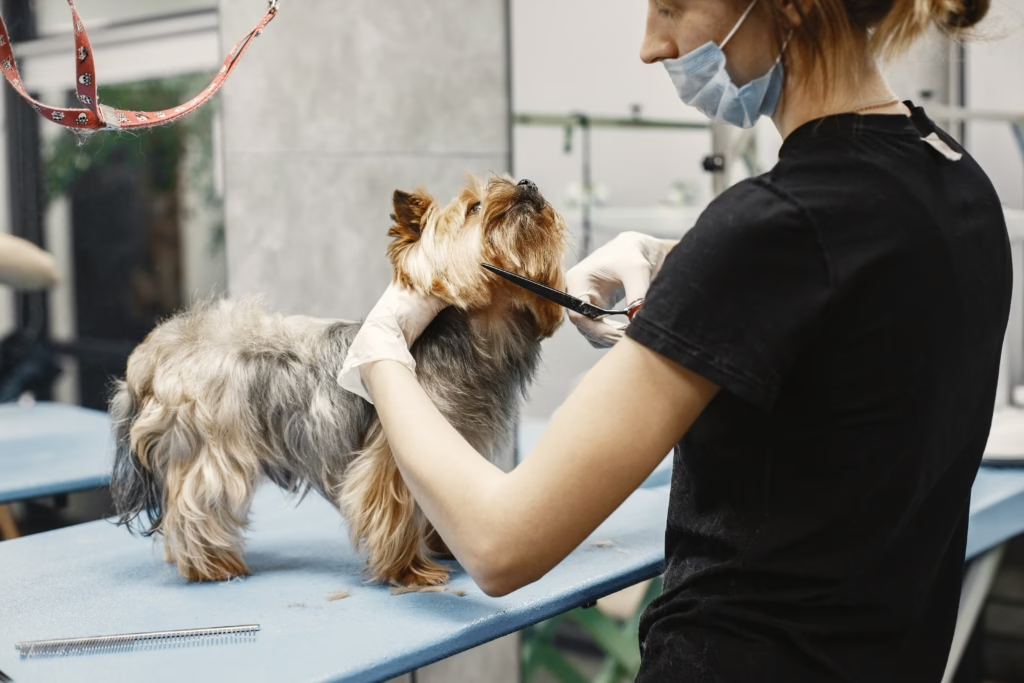
The “Sponge Effect”: How Goldendoodle Fur Traps Outdoor Pollen and Dust
A curly, non-shedding coat acts as an absorbent sponge. While it effectively traps the dog’s own dander, it also collects environmental allergens like pollen, mold spores, and dust from the outdoors. If a Goldendoodle is not washed regularly, the dog effectively becomes a delivery system for these airborne irritants, potentially exacerbating the owner’s existing allergies even if they are not sensitive to the dog itself.
The Matting Risk: Why Poor Coat Health Leads to Increased Dander
A Goldendoodle’s coat requires rigorous maintenance. If left ungroomed, the fur becomes matted. Mats trap dead skin cells and dander close to the dog’s body, leading to skin irritation and increased bacterial growth. This skin inflammation causes the dog to produce even more dander, creating a cycle that makes the dog progressively more allergenic.
Safe Brushing Practices: How to Prevent Releasing Allergens Into the Air
Brushing is a necessity, but it can be an allergy trigger for the owner. It is recommended to perform grooming in a well-ventilated area or outdoors to prevent inhaling loose dander. Using a conditioning spray during the brushing process can help “bind” the dander to the fur, preventing it from becoming airborne.
Managing the “Allergen Load” in a Goldendoodle Household
High-Frequency Grooming Routines to Minimize Dander Accumulation
To maintain an allergy-friendly home, professional grooming every six to eight weeks is the standard. Daily brushing sessions are essential, but owners should also consider regular “rinse-offs” or bathing with hypoallergenic shampoos to remove protein buildup from the coat.
The Role of HEPA Filtration and Air Quality Control
Investing in high-quality HEPA air purifiers is a non-negotiable step for allergy-sensitive households. These filters capture the microscopic dander particles that vacuums and dusters often redistribute. Placing these units in the bedrooms and main living areas can significantly reduce the overall allergen load.
Housekeeping Strategies: Vacuuming, Bedding, and “Dog-Free” Zones
Soft surfaces are “allergen magnets.” Minimizing carpets, using allergy-proof covers on furniture, and frequently washing dog bedding in hot water are effective strategies. Establishing a “dog-free” zone—such as the master bedroom—can provide the human immune system with a necessary period of recovery during sleep.
How Your Dog’s Diet and Skin Health Impact Your Allergy Symptoms
A healthy dog sheds less dander. High-quality diets rich in Omega-3 fatty acids promote skin barrier health, reducing the likelihood of dry, flaky skin. If a Goldendoodle suffers from skin allergies or poor nutrition, their dander output will increase, directly impacting their owner’s comfort.
How Allergy-Sensitive Families Can Evaluate a Dog Before Bringing One Home
Choosing a dog can be more complicated when someone in the household has allergies. A dog’s breed, coat, shedding level, and grooming routine may influence how much allergen is present in the home, but there is no breed that can guarantee an allergy-free experience.
Goldendoodles and other Poodle mixes are sometimes described as hypoallergenic because some individuals shed less than other dogs. However, people can still react to allergens found in a dog’s dander, saliva, urine, and other materials.
For that reason, allergy-sensitive families should evaluate their individual response before committing to a puppy or adult dog.
1. Spend Time With the Specific Dog You Are Considering
A general visit with a breed is not always enough to determine whether you will tolerate a particular dog.
If possible, spend meaningful time with the specific puppy or adult dog you are considering. This gives you an opportunity to observe how your body responds to that individual animal.
During the visit, consider normal interactions such as:
- Sitting in the same room with the dog
- Gently petting the dog
- Spending time near its bedding or living area
- Observing the dog during normal activity
- Being around the dog for an extended period rather than only a few minutes
Individual dogs can produce different levels of allergens, and people’s reactions can also vary.
A positive experience with one dog should therefore not be treated as a guarantee that you will react the same way to another dog.
2. Remember That Dog Allergies Are Not Simply About Fur
One common misconception is that dog allergies are caused only by shedding hair.
In reality, allergens can be associated with proteins found in substances such as dander and saliva. Hair can also carry allergens around the home.
This is why simply choosing a dog with curly or low-shedding hair does not guarantee that someone with allergies will have no symptoms.
If you notice symptoms after interacting with a dog, don’t try to determine the exact allergen based solely on whether the dog licked you or whether you touched its coat. The source of an allergic reaction is not always obvious from the timing of symptoms.
3. Consider Speaking With an Allergy Specialist
If allergies are an important concern, professional medical advice is more reliable than trying to diagnose the trigger yourself.
An allergist can review your symptoms and medical history and determine whether allergy testing is appropriate. Depending on the situation, testing may include skin testing or blood testing for specific IgE antibodies.
Testing can provide useful information, but it does not necessarily predict exactly how comfortable you will be living with a particular dog every day.
For that reason, medical advice and real-world exposure should be considered together.
4. Think About How a Puppy’s Coat Can Change
A puppy’s appearance does not always predict what its adult coat will look like.
Young dogs have puppy coats that can change as they mature. During this transition, the coat may become:
- Longer
- Denser
- Curlier
- Wavier
- Different in texture
- More or less noticeable in terms of shedding
For Goldendoodles, coat development can vary considerably between individual dogs.
A puppy that appears to be very low-shedding at a young age should not automatically be considered allergy-safe. Ask the breeder about the parents’ coat types and family history, but remember that genetics cannot provide an absolute guarantee.
5. Consider a Longer Trial When Appropriate
A short meeting can be useful, but it may not tell you what living with a dog will be like.
If an appropriate foster or trial arrangement is available, spending an extended period with the dog can provide more information about how you respond in a real home environment.
However, a trial should only be arranged through a trustworthy organization or responsible program with clear expectations about the dog’s care and return arrangements.
A longer exposure can also reveal practical considerations beyond allergies, including:
- How much grooming the dog requires
- How much hair or dander accumulates in the home
- Whether symptoms change over time
- How the dog behaves indoors
- How much cleaning is necessary
- Whether the household can comfortably manage the dog’s daily needs
Never assume that being comfortable for one or two days guarantees that long-term exposure will be symptom-free.
Red Flags When Choosing a Goldendoodle Breeder
Why You Should Avoid Breeders Who Guarantee “100% Hypoallergenic” Pups
Any breeder who makes an absolute guarantee about hypoallergenic properties is either uneducated or dishonest. Ethical breeders acknowledge the biological variables and prioritize temperament and health over marketing buzzwords.
Essential Questions Regarding Genetic Testing and Coat Quality
Always ask for documentation regarding parental health testing, specifically DNA panels that confirm the presence of the furnishings gene. A transparent breeder will provide this data willingly.
Identifying Responsible Breeding: Looking Beyond the “Teddy Bear” Aesthetic
Look for breeders who focus on functional health rather than just the “doodle” aesthetic. Membership in organizations like the Goldendoodle Association of North America (GANA) can be a helpful, though not exhaustive, indicator of adherence to breeding standards.
Alternatives for Severe Allergy Sufferers
If you have severe asthma or a history of anaphylaxis, even the lowest-shedding dog may pose a health risk. In such cases, consider fostering or volunteering at a shelter to assess your response in a controlled environment before committing to ownership. Alternatively, consider dog breeds known for more consistent coat types, though remember that the “hypoallergenic” caveat remains universal across the species.
Conclusion
The question “Are Goldendoodles hypoallergenic?” does not have a simple “yes” or “no” answer. While their Poodle genetics often result in lower-shedding coats that are generally easier for allergic individuals to tolerate, they are not allergen-free. Success in bringing a Goldendoodle into an allergy-sensitive home depends entirely on a strategy of risk mitigation: selecting a puppy with the correct genetic background for furnishings, maintaining a rigorous grooming and cleaning routine, and utilizing technology like HEPA filtration. By viewing your potential pet through this logical, rather than emotional, lens, you can determine if a Goldendoodle is a compatible addition to your life. Remember that pet ownership is a long-term commitment; perform your due diligence, consult with an allergist, and prioritize health to ensure a happy, symptom-managed future for both you and your canine companion.
Are Goldendoodles Hypoallergenic?
Is a Goldendoodle a good choice for people with allergies?
Absolutely! Goldendoodles can be a suitable option for individuals with mild to moderate allergies, although they aren’t entirely allergy-free. This breed is often suggested for allergy sufferers because they generally shed less than many other dogs, which means they release less dander—the main trigger for pet allergies.
However, it’s important to note that results can vary. Goldendoodles are a mix of Golden Retrievers (known for heavy shedding) and Poodles (which shed less). Depending on which parent they resemble, their coat type and shedding levels can differ quite a bit.
A Common Question: Are They Really Hypoallergenic?
No dog breed is genuinely hypoallergenic, and Goldendoodles fall into the same category. The term “hypoallergenic” can be misleading. A study from 2011 showed that homes with so-called “hypoallergenic” breeds had allergen levels similar to those with “regular” breeds.
What makes Goldendoodles potentially better for allergy sufferers is their coat type. If they inherit the Poodle’s curly coat, their hair can trap dander, reducing how much becomes airborne. However, if they take after the Golden Retriever with a straighter coat, they may cause just as many allergy issues as any other dog.
Should You Consider Adopting a Doodle?
While Doodles are not truly hypoallergenic, adopting one can be a wise choice if you know what to expect.
The term “hypoallergenic” is often used by breeders for marketing purposes. Even with a Goldendoodle, you might still experience allergy symptoms. However, many individuals with mild allergies find they can coexist comfortably with a Goldendoodle—especially if they choose the right generation and coat type.
Why It’s a Smart Decision:
- Predictable Generations Matter: An F1b Goldendoodle (backcrossed with a Poodle) is more likely to have a low-shedding, allergy-friendly coat compared to an F1 (50/50 Golden Retriever and Poodle).
- Spend Time with the Individual Dog: Each puppy in a litter can have a different coat type, so it’s a good idea to spend time with the specific puppy to see how you react.
Potential Downsides:
- No Guarantees: Even within a “hypoallergenic” litter, some puppies might shed more than others.
- Real-Life Example: A Michigan breeder noted a family returning a mini Goldendoodle due to severe allergies shortly after adoption, illustrating that even this breed can provoke significant reactions.
Are Goldendoodles Hypoallergenic?
No, Goldendoodles are not hypoallergenic. They are often labeled as a low-allergen or allergy-friendly breed due to their potential for lower shedding, but they are not entirely allergen-free.
The confusion arises from their Poodle lineage. Poodles are frequently categorized as “hypoallergenic” because they shed minimally. However, as a mixed breed, a Goldendoodle may or may not inherit this trait.
Do Goldendoodles Cause Allergies in Sensitive Individuals?
Yes, they certainly can. While they might be easier on allergies than a Golden Retriever, individuals with sensitivities can still experience symptoms.
A notable case reported by Newsweek involved a mini Goldendoodle puppy being returned because the new owner suffered from “severe allergies.” This emphasizes that the individual dog’s coat is often more significant than the breed label. A Goldendoodle with a straight coat will shed more and likely cause more allergic reactions than one with a curly, Poodle-like coat.
Why Are Goldendoodles Considered Hypoallergenic?
Goldendoodles are often labeled “hypoallergenic” for a few reasons:
- Curly Coat Inheritance: They often take on the Poodle’s curly coat, which grows continuously and sheds minimally. This helps reduce dander in the environment.
- Dander Trapping: In curly-coated Goldendoodles, dander (the dead skin cells that carry allergens) gets trapped in their hair instead of floating freely.
- Breeding Purpose: Goldendoodles were originally bred (along with Labradoodles) to serve as assistance dogs for people with allergies, reinforcing their reputation as “hypoallergenic.”
- Lower Shedding Equals Lower Allergen Spread: Less shedding means that fewer hairs carrying dander are dispersed throughout the home.
However, these benefits are not guaranteed and depend significantly on the individual dog’s genetic background.
Can People with Dog Allergies Safely Live with a Goldendoodle?
Yes, many individuals with mild to moderate allergies can live comfortably with a Goldendoodle, provided they take careful precautions. Here’s what to consider:
- Choose the Right Generation: F1b or F1bb Goldendoodles (backcrossed with Poodles) are more likely to have low-shedding, allergy-friendly coats.
- Look for “Furnishings”: Dogs with facial hair (eyebrows, mustache, beard) are typically more likely to have the gene for a non-shedding coat, making them better for allergies.
- Be Realistic: Those with severe allergies may still react, even to a Goldendoodle. It’s wise to spend time with the individual dog before making a commitment to see how you respond.
- Consult Your Doctor: Before bringing a Goldendoodle home, speak with an allergist. They can provide guidance on medications, allergy shots, and whether living with a dog is feasible for you.
What Grooming Practices Can Reduce Allergens in Goldendoodles?
Grooming plays a crucial role in managing allergies with a Goldendoodle. Here are some effective practices:
- Regular Bathing: Bathe your Goldendoodle weekly to remove dead skin cells and allergens from their coat. If you’re the one bathing them, consider wearing gloves, or ask a non-allergic family member to do it.
- Frequent Brushing: Daily brushing helps remove loose hair and dander, preventing matting. If you’re allergic, have someone else brush the dog or wear a mask. Whenever possible, brush outside to minimize dander circulation indoors.
- Thorough Home Cleaning: Regularly use a HEPA vacuum cleaner to trap microscopic dander particles, and employ HEPA air purifiers in rooms where the dog spends time. Change air filters often to capture pet hair and dander, and wash the dog’s bedding frequently.
- Create “Dog-Free Zones”: Keeping your bedroom off-limits can help reduce nighttime allergen exposure. Try to limit the dog to one or two rooms in the house.
- Wipe Down After Outdoor Excursions: Use dog wipes to remove pollen, mold, and dander from their coat when they come inside.
Summary Table: Goldendoodle Coat Types and Allergy Potential
| Coat Type | Shedding Level | Dander Control | Best for Allergies? |
|---|---|---|---|
| Curly (Poodle-like) | Low | High (traps dander) | ✅ Yes |
| Wavy (Mix) | Moderate | Moderate | ⚠️ Possibly |
| Straight (Golden-like) | High | Low | ❌ No |
Final Verdict
Goldendoodles are not truly hypoallergenic, but they can be a wonderful choice for some allergy sufferers. Key factors to keep in mind include:
- Choose the right generation (F1b, F1bb, or multigen with Poodle ancestry).
- Look for a curly coat with furnishings (facial hair).
- Commit to diligent grooming (weekly baths, daily brushing).
- Spend time with the individual dog before adopting.
- Consult your doctor if you have severe allergies.
With the right precautions, many allergy sufferers can enjoy the companionship of a Goldendoodle, but it’s essential to approach this decision with realistic expectations and a solid plan for managing symptoms.