
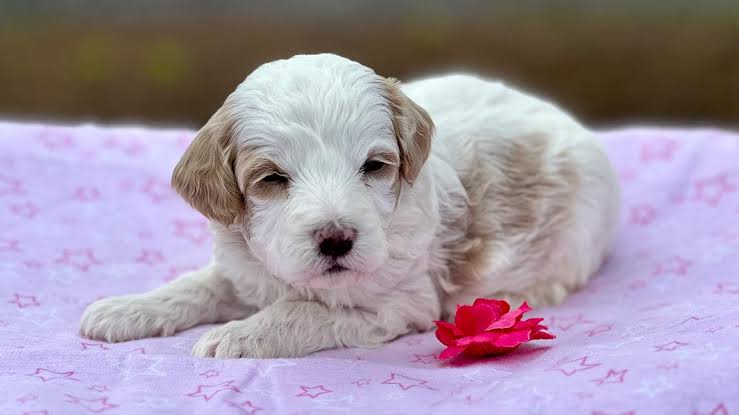
An English Goldendoodle is a Golden Retriever–Poodle cross that has become popular among people looking for an affectionate, intelligent, and versatile companion. The name “English” generally refers to the Golden Retriever side of the cross, particularly dogs descended from English or European-style Golden Retriever lines.
English Goldendoodles can have a distinctive appearance, including a broader head, sturdy build, and lighter coat colors. However, every puppy is an individual, and its final appearance, size, coat, and temperament depend on genetics inherited from both parents.
If you are considering an English Goldendoodle for your family, understanding these differences can help you make a more informed decision.
What Is an English Goldendoodle?
An English Goldendoodle is a cross between an English-type Golden Retriever and a Poodle.
The Golden Retriever contributes many of the characteristics people associate with retrievers, including an affectionate personality, willingness to interact with people, and playful nature. The Poodle contributes its own traits, including intelligence, trainability, and a variety of coat textures.
The result is not a standardized purebred dog. English Goldendoodles can differ significantly from one another depending on their parents, generation, size, and individual genetics.
The Poodle used in the breeding program can also influence the puppy’s eventual size. Miniature Poodles may produce smaller Goldendoodles, while Standard Poodles generally produce larger dogs.
What Does “English” Mean in English Goldendoodle?
The word “English” primarily describes the Golden Retriever ancestry.
English or European-style Golden Retrievers are often associated with characteristics such as:
- Broader heads
- Stockier body structure
- Lighter cream or golden coats
- Different body proportions from some American Golden Retrievers
These characteristics can be passed to Goldendoodle puppies, but there is no guarantee that every English Goldendoodle will have the same appearance.
It is therefore useful to look at the actual parents rather than choosing a puppy based solely on the label “English.”

English Goldendoodle vs. American Goldendoodle
The difference between an English Goldendoodle and an American Goldendoodle usually comes from the Golden Retriever parent.
An English Goldendoodle has an English or European-type Golden Retriever in its ancestry, while an American Goldendoodle generally has an American Golden Retriever parent.
Appearance can differ between the two.
English-type Golden Retrievers are often heavier-boned and lighter in color, while American Golden Retrievers can have a leaner build and a wider range of golden shades.
However, these are general tendencies rather than strict rules. Goldendoodle appearance is influenced by both parents and multiple generations of genetics.
English Cream Goldendoodle
You may also encounter the term English Cream Goldendoodle.
This name is generally used for Goldendoodles with a pale cream coat associated with English or European Golden Retriever ancestry.
Cream-colored Goldendoodles can be especially attractive to prospective owners, but coat color should not be the only consideration when selecting a puppy.
Health, temperament, socialization, parent health testing, expected adult size, and the quality of care provided are much more important factors for a long-term companion.
English Goldendoodle Coat Types
One of the most noticeable features of a Goldendoodle is its coat.
Depending on genetics, an English Goldendoodle may develop a relatively straight, wavy, or curly coat.
Straight Coat
A straighter coat may resemble the Golden Retriever parent more closely. Dogs with this type of coat may shed more than Goldendoodles with curlier coats.
Wavy Coat
Wavy coats are common in Goldendoodles and can have a soft, fluffy appearance. They may require regular brushing to prevent tangles and mats.
Curly Coat
Curly coats generally resemble the Poodle side more strongly. These coats can require frequent grooming because loose hair can become trapped within the curls and form mats.
A puppy’s coat can change as it matures, so the coat you see during early puppyhood may not look exactly the same in adulthood.
Are English Goldendoodles Hypoallergenic?
No dog is completely hypoallergenic.
Some English Goldendoodles may shed less than other dogs, particularly individuals with certain curly or wavy coats. However, allergies can be triggered by proteins found in dander, saliva, and other materials rather than hair alone.
If someone in your household has allergies, spend time around dogs with similar coats before making a decision. Individual allergic reactions can vary considerably.
English Goldendoodle Temperament
Temperament is one of the major reasons people are interested in English Goldendoodles.
Many inherit friendly and affectionate qualities from their Golden Retriever ancestry while also displaying the intelligence and trainability associated with Poodles.
A well-socialized English Goldendoodle may be:
- Affectionate
- Playful
- Intelligent
- Social
- Curious
- Eager to learn
- Strongly attached to its family
However, there is no guarantee that every dog will have exactly the same personality.
Genetics, early socialization, training, environment, and individual experiences all influence temperament.
Are English Goldendoodles Good Family Dogs?
English Goldendoodles can be excellent family companions for households prepared to meet their needs.
Their affectionate nature can make them enjoyable companions for adults and children. They generally benefit from being involved in family activities rather than being left alone for long periods.
Families with young children should teach children how to interact appropriately with dogs. Puppies should not be pulled, chased, disturbed while eating, or handled roughly.
Young children should also be supervised when interacting with a puppy.
English Goldendoodle Size
English Goldendoodles do not have one standardized adult size because they are crossbred dogs.
Their eventual size is influenced largely by the Poodle parent and the puppy’s genetics.
Common size categories include:
Mini English Goldendoodle
A Mini English Goldendoodle is generally produced using smaller Poodle ancestry. These dogs are typically more compact and may be suitable for people with limited living space.
Medium English Goldendoodle
Medium Goldendoodles occupy the middle of the size spectrum. They can be a practical option for families that want a dog that is neither especially small nor particularly large.
Standard English Goldendoodle
Standard English Goldendoodles are generally produced using Standard Poodle ancestry and can become considerably larger.
Because these categories are not universally standardized, prospective owners should ask about the actual adult sizes of both parents and previous generations.
How to Choose the Right English Goldendoodle Size
Choosing a size should be based on your lifestyle rather than appearance alone.
Consider:
- How much space you have
- Your daily exercise routine
- Whether you have children
- Your ability to handle a larger dog
- Grooming requirements
- Transportation needs
- How much time the dog will spend alone
A smaller Goldendoodle still needs exercise and training. Likewise, a Standard Goldendoodle can be a wonderful companion in an appropriately managed home.
Caring for an English Goldendoodle
English Goldendoodles are not maintenance-free dogs. Their care requirements include grooming, exercise, nutrition, training, socialization, and preventive veterinary care.
Grooming
Regular brushing is particularly important for wavy and curly coats.
Depending on the coat, grooming may include:
- Brushing several times each week
- Professional grooming when necessary
- Bathing when appropriate
- Nail trimming
- Ear care
- Dental hygiene
- Regular inspection for mats
Curly coats may require more frequent brushing because mats can develop close to the skin.
Professional grooming schedules vary depending on coat length and texture.
Exercise Requirements
English Goldendoodles are generally active companion dogs that benefit from daily exercise.
Appropriate activities can include:
- Walks
- Fetch
- Supervised outdoor play
- Swimming
- Obedience exercises
- Interactive games
- Puzzle toys
The amount of exercise should be adjusted for the dog’s age, size, health, and energy level.
Puppies should not be pushed into excessive or strenuous exercise while their bones and joints are developing.

Mental Stimulation
Physical exercise is only part of caring for an intelligent Goldendoodle.
Mental stimulation can include:
- Food puzzles
- Basic obedience exercises
- Trick training
- Scent games
- Interactive toys
- Learning new commands
Providing appropriate mental challenges can help prevent boredom and encourage good behavior.
Feeding an English Goldendoodle
Nutrition should be tailored to the dog’s age, size, activity level, and health.
Puppies require food formulated for growth, while adult dogs need an appropriate maintenance diet.
Avoid automatically feeding large portions simply because your dog appears hungry. Maintaining an appropriate body condition can support mobility and overall health.
A veterinarian can help you determine appropriate feeding amounts and make dietary recommendations based on your dog’s individual needs.
Fresh water should always be available.
Training an English Goldendoodle
Training can be enjoyable because many Goldendoodles are intelligent and responsive to positive reinforcement.
Start with basic behaviors such as:
- Sit
- Stay
- Come
- Down
- Leave it
- Leash walking
Use rewards, praise, toys, and other forms of positive reinforcement to encourage desirable behavior.
Short training sessions are often more effective for puppies than lengthy sessions.
Consistency is equally important. Everyone in the household should use the same basic commands and expectations.
Socialization
Early socialization can help puppies become comfortable with everyday situations.
A puppy can gradually be introduced to appropriate:
- People
- Household sounds
- Car journeys
- Grooming
- Different surfaces
- New environments
- Leash handling
- Healthy and appropriately vaccinated dogs
Socialization should be gradual and positive rather than overwhelming.
Follow veterinary guidance regarding vaccinations and safe opportunities for interaction with other animals.
English Goldendoodle Health
Like all dogs, English Goldendoodles can potentially develop health problems.
Their Golden Retriever and Poodle ancestry means that inherited conditions associated with either parent breed may be relevant.
Potential health concerns can include:
- Hip dysplasia
- Elbow dysplasia
- Certain eye disorders
- Ear problems
- Skin allergies or sensitivities
- Other inherited conditions
This does not mean that every English Goldendoodle will develop these problems.
Responsible breeding, appropriate health testing, veterinary examinations, proper nutrition, exercise, dental care, and maintaining a healthy body weight can all contribute to a dog’s wellbeing.
How Long Do English Goldendoodles Live?
Lifespan varies between individual dogs and depends on genetics, health, nutrition, lifestyle, and veterinary care.
Rather than focusing on a guaranteed number of years, prospective owners should concentrate on providing good preventive care throughout the dog’s life.
Regular veterinary visits can help identify potential health concerns early.
How to Find a Responsible English Goldendoodle Breeder
Choosing a responsible breeder is one of the most important decisions you can make when purchasing an English Goldendoodle puppy.
A reputable breeder should be willing to provide information about the puppy’s parents and health history.
Ask questions such as:
- What health testing has been performed on the parents?
- Can I review available veterinary records?
- What are the parents’ sizes and temperaments?
- How are the puppies socialized?
- What vaccinations and deworming have the puppies received?
- What food are the puppies eating?
- Where are the puppies raised?
- What adult size is expected?
- What support is provided after the puppy goes home?
Be cautious if a seller refuses to answer reasonable questions, will not provide health information, pressures you to make a quick payment, or cannot explain how the puppies have been raised.
Preparing Your Home for an English Goldendoodle Puppy
Before your puppy arrives, prepare a safe area where it can sleep, eat, play, and relax.
Useful supplies include:
- Puppy food
- Food and water bowls
- Comfortable bedding
- Collar and identification
- Leash
- Age-appropriate toys
- Grooming supplies
- Cleaning products
- A crate or designated sleeping area
Puppy-proof the home before arrival.
Keep medications, cleaning products, electrical cables, small objects, toxic plants, and dangerous foods away from areas the puppy can reach.
English Goldendoodle Cost
The price of an English Goldendoodle can vary significantly.
Factors affecting price may include:
- Breeder location
- Parent lineage
- Health testing
- Generation
- Puppy size
- Coat characteristics
- Veterinary care
- Early socialization
There is no single price that applies to every English Goldendoodle.
Prospective owners should also budget for the ongoing costs of ownership, including food, grooming, veterinary care, training, toys, supplies, and unexpected medical expenses.
A low purchase price should not automatically be considered the best deal.
Why Families Choose English Goldendoodles
English Goldendoodles appeal to many families because they can combine several qualities people want in a companion dog.
They may offer:
Affection: Many enjoy staying close to their families.
Trainability: Their Golden Retriever and Poodle heritage can contribute to an eagerness to learn.
Playfulness: They often enjoy games, walks, and interactive activities.
Coat variety: Puppies can develop straight, wavy, or curly coats.
Different size options: Depending on the Poodle parent, Goldendoodles can be bred in different size categories.
However, these characteristics should be considered possibilities rather than guarantees.
Frequently Asked Questions About English Goldendoodles
What is an English Goldendoodle?
An English Goldendoodle is a cross between an English or European-type Golden Retriever and a Poodle. Its appearance and characteristics depend on the genetics inherited from both parents.
What is an English Cream Goldendoodle?
An English Cream Goldendoodle generally refers to a Goldendoodle with a pale cream coat associated with English or European Golden Retriever ancestry.
Are English Goldendoodles hypoallergenic?
No. No dog is completely hypoallergenic. Some Goldendoodles may shed less, but people with allergies can still react to them.
Are English Goldendoodles easy to train?
Many are intelligent and responsive to positive reinforcement. Consistent training and early socialization are still necessary.
How much exercise does an English Goldendoodle need?
Exercise requirements vary according to age, size, health, and individual energy level. Walks, interactive play, training, and mental stimulation can all form part of a suitable routine.
Do English Goldendoodles need professional grooming?
Many benefit from professional grooming, particularly dogs with longer, wavy, or curly coats. The required frequency depends on coat texture and length.
Are English Goldendoodles good with children?
Many can make affectionate family companions. Children should nevertheless be taught appropriate behavior around dogs, and young children should be supervised.
What should I ask an English Goldendoodle breeder?
Ask about parent health testing, veterinary records, temperament, puppy socialization, vaccinations, expected adult size, living conditions, and ongoing support.
Conclusion
The English Goldendoodle combines English or European-type Golden Retriever ancestry with Poodle genetics, producing a companion dog that can vary considerably in appearance, size, coat, and personality.
Their affectionate nature and potential for trainability make them attractive to many households, but they still require daily care and commitment. Regular grooming, appropriate exercise, balanced nutrition, socialization, training, and veterinary care are all essential parts of responsible ownership.
If you are considering an English Goldendoodle, take time to research the puppy’s parents and the person or organization providing the puppy. Look beyond coat color and appearance and consider health, temperament, expected size, living requirements, and long-term costs.
Choosing carefully at the beginning can help you find a companion that is genuinely suited to your household and lifestyle.